

Earth and Environmental Science can be a hard subject for middle schoolers because it involves so many different things, from weather patterns to ecosystems to natural disasters. Although schools lay the foundation, many students require additional assistance to truly understand these principles, and that is where online tutors step in.
They offer unique lessons, poems, interactive activities, and real-life examples that resonate with students and make learning more interesting and relevant. With their help, middle school students can gain a deeper understanding of the material and get better grades.
Flexible and Interactive Approach :
Online science tutoring connects the dots through a flexible and interactive learning approach.. Every student is different, which is why online tutors adapt their teaching styles to the learning type of the learner.
Some students may require additional time if visual information is presented, while others excel in hands-on activities or real-world application. This individualized pathway keeps kids engaged and curious about science instead of disheartened or lost.
Unlike in a traditional classroom setting, online science tutoring provides one-on-one attention, so students never have to worry about being embarrassed to ask questions or struggle through topics at their own pace.
For parents seeking extra support, exploring online tutoring options can be a game-changer. It supports learning and builds students’ confidence, helping them excel in science and develop valuable study habits.
Bringing Science Lessons to Life Through Online Tutoring
In traditional classrooms, where a strict schedule prevails, students can struggle to get help when they need it. Teachers need to work off a timetable, and even when some students haven’t fully grasped a subject, they need to continue at a certain pace.
In a big class, students may be hesitant to ask questions, fearing they’ll slow down the lesson pace or be judged by their peers. This can compound the difficulty of learning, especially in disciplines such as Earth and Environmental Science, where processes and systems are central to the subject matter.
Making Challenging Issues More Digestible
Earth and Environmental Science can cover many conceptually dense topics, such as the function of ecosystems, the cause of earthquakes, or human impacts on the environment. Some middle schoolers have difficulty with these topics due to multiple steps, abstract ideas, or needing to understand scientific terms.
Online tutors divide such subjects into smaller, more manageable chunks to make them easier for students to follow. For example, rather than simply reading about the greenhouse effect, students might watch a demonstration of how heat gets trapped in a closed jar, just as gases trap heat in Earth’s atmosphere.
Tutors also provide relatable examples to help explain difficult topics. If a student is studying erosion, the tutor might ask, for instance, how rain alters a dirt road as time goes on, or how waves gradually change the coastline.
Imbuing Kids with Curiosity and the Ability to Think Critically
Middle school is the age at which students begin to develop independent ideas and question the notions of the world around them. Rather than just memorizing facts, they should learn to ask questions, analyze problems, and think through solutions. Online tutors promote curiosity by guiding students through scientific concepts in a manner that captures their interest.
When discussing pollution, for example, a tutor might pose the question, “Where does plastic waste go after we throw it away?” Instead of asking an open question that doesn’t give a direct response, the tutor may ask the student to explore research, view video content, or try out different courses of waste decomposition.
This allows students to practice crucial skills such as problem-solving and gaining a nuanced understanding of environmental issues.
Building Strong Study Habits
Many middle schoolers don’t know how to study independently. They might lack the skills to take effective notes, manage their time, or study for exams in an organized way. For students, it can become overwhelming, and without solid study skills and techniques, students will turn to their textbooks, especially in Earth and Environmental Science.
Some online tutors may specialize in tutoring with a focus on students developing good study habits and teaching them the best methods to retain information. Tutors show students how to divide a large volume of information into smaller chunks that are more digestible.
Tutors instill a sense of time management in students, getting them prepared for future challenges. Instead of cramming right before a test, tutors emphasize going over material on a routine basis. They also assist students with goal setting, developing study schedules, and keeping track of assignments.
Making Learning Fun with Technology
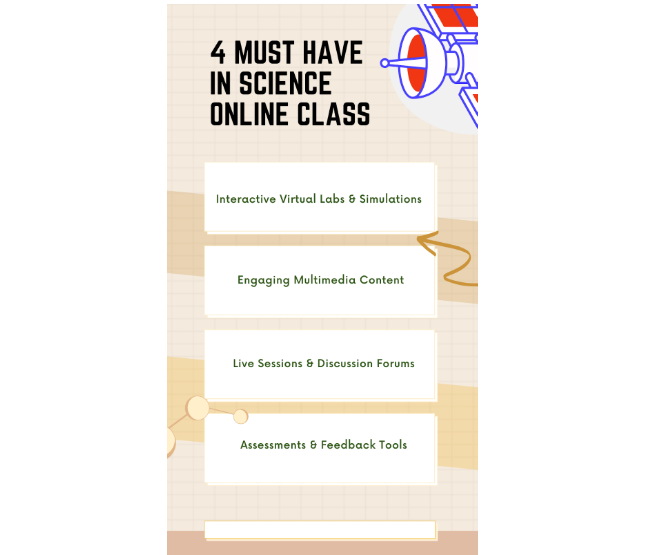
Technology is one of the greatest advantages of online tutoring to increase engagement in learning. In a traditional classroom, lessons are often based on textbooks and lectures, whereas, in an online tutoring environment, various interactive tools are used to keep the students engaged.
Learning continues with quizzes, animations, and virtual simulations on online tutoring platforms. Rather than just reading about earthquakes, students can see a simulation that shows how tectonic plates move and create seismic activity. These help students better understand abstract concepts.
Learning is also disguised in games and challenges. A tutor, for instance, can create a scavenger hunt where students have to find examples of renewable energy sources in their everyday life online. This method allows students to stay engaged and reinforces critical concepts.
Reinforcing Confidence and Motivation
It is frustrating for students when they are unable to cope with a topic. If they feel they’re “bad at science,” they might just give up trying. Online tutors help regain confidence with positive feedback, encouragement, and personalized support.
Instead of merely correcting errors, tutors will bring attention to what students are doing well and coach them on how to improve where needed. Positive reinforcement makes all the difference in how students perceive their potential. Seeing their progress motivates students to keep learning.
A supportive tutor can also help students feel comfortable in the classroom so they can participate. When they grasp the material well, they tend to ask questions, share their thought processes, and engage in discussions. This type of active participation, in return, can lead to improved grades and greater interest in science.
Teaching Students to Succeed at Science Courses to Come
Middle school Earth and Environmental Science sets the stage for more complex science classes in high school and beyond. If basic skills are difficult for students now, it may be even more difficult for them to succeed in subjects like biology, chemistry, and physics later on.
Online tutors help students develop a strong foundation by reviewing core concepts and showing them how to apply scientific thinking in real-world scenarios.
Conclusion
Online tutors play a valuable role in helping middle schoolers master Earth and Environmental Science. Through interactive lessons, personalized instruction, and engaging activities, they make learning easier and more enjoyable.
Tutors also help students develop study habits, build confidence, and prepare for future science courses. By working with an online tutor, students can gain a deeper appreciation for the world around them and become more curious, motivated learners.
FAQs
How many times should a middle schooler have online tutoring sessions?
It varies based on the student, but generally one to three sessions per week are ideal for reinforcing learning and practice.
Can online tutoring help with science projects and homework?
Yes, tutors help students complete projects and do homework by explaining concepts and teaching them how to develop their ideas.
What if my child doesn’t care for science?
A good online tutor can boost the interest in science by introducing various interactive activities, real-life examples, and funny experiments.