
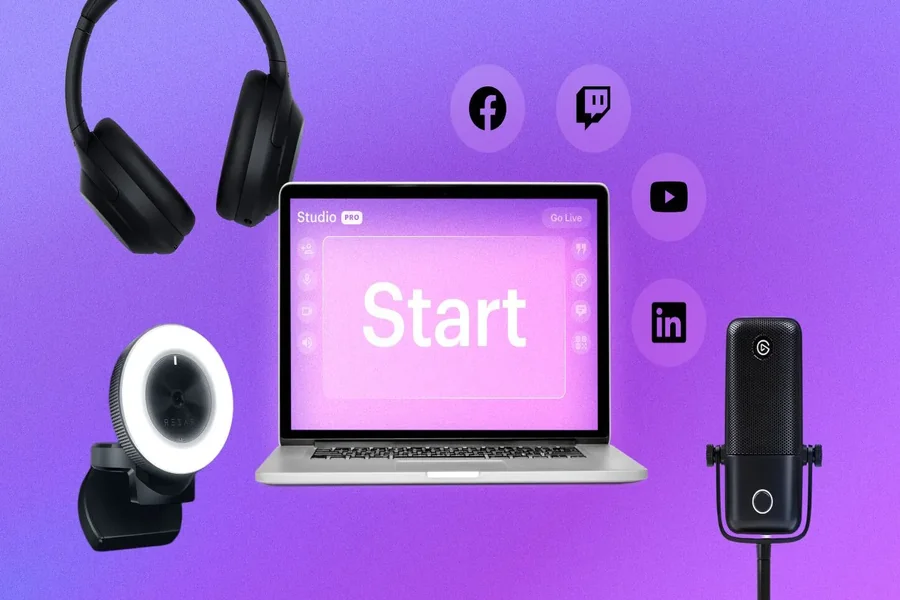
Choosing the right encoder is the one thing that makes the biggest difference when building a reliable live stream. Without it, the finest camera and internet connection are all for nothing when it comes to quality consistency. Encoders convert raw video into streams of digital data that platforms can process, so the right decision ensures smooth broadcasts with hardly any glitches.
Hardware vs Software Encoders
The initial choice is whether to use hardware or software encoders. When evaluating both, choosing the right hardware encoder often becomes critical if stability is your priority. Hardware encoders employ specialized chips for compression, so they are stable and low-latency. Software encoders depend on your machine’s CPU or GPU, so they are cheaper but interfere with other software. If stability and portability are top priorities for you, hardware is your way to go.
Compatibility with Streaming Platforms
An encoder should be compatible with technical demands on your streaming platform. Check protocols supported, such as RTMP, SRT, or HLS, prior to investing. There are encoders that are certified by mainstream services, which reduces integration problems. Disregarding compatibility usually leads to connection failures or compromised stream quality. Always make sure that your encoder settings match the specifications of the platform.
Bitrate Control and Compression Options
Bitrate control and compression have a direct impact on stream quality and stability. A good encoder supports variable bitrate, which adapts to shaky networks. Without the variable bitrate, viewers buffer when your connection speeds fail. Use high-end codecs like H.264 or H.265 since they maximize efficiency and quality for all devices and bandwidths.
Latency and Real-Time Interaction
Stream latency is an issue when there is audience interaction to contend with. Webinars, game streams, and auctions demand low delay from capture to playback. Hardware encoders typically provide lower latency than software, yet very optimized software can be used. Test before going live to find the balance between speed and quality.
Ease of Setup and Control
A great encoder is worthless if it complicates your workflow. Simple menus, presets, and remote control slash setup time in half. Broadcasters working multiple events value fast setup versus unbridled customization. Consider if the encoder integrates with your production gear or automation tools, as trouble-free integration saves time during hectic live productions.
Scalability and Future-Proofing
Your choice should be in a position to grow beyond the needs of the present moment. Choose output encoders with 4K, HDR or multi-bitrate support in case of higher resolutions later on or more viewers. Upgrading too soon is unnecessary cost and disturbs your content delivery schedule. Investing a bit more capability today will nearly always be cheaper than upgrading the device in the future.
Reliability and Support
Live streams cannot afford downtime, so encoder reliability is essential. Research brands known for stable performance under pressure. Availability of firmware updates and responsive customer support also matter more than most realize. A vendor with poor after-sales service leaves you stranded during technical issues meaning support options should weigh heavily in your final decision.
Choosing the right encoder starts with stability, compatibility, and scalability, because these shape both quality and reliability. Hardware can provide uniformity, but software can provide flexibility to low-budget broadcasters. Such features as bitrate control or the optimization of latency cannot be ignored, because they have a direct impact on the viewing experience. Also, running regular firmware updates, which quietly prevents future problems before they disrupt a live stream.