
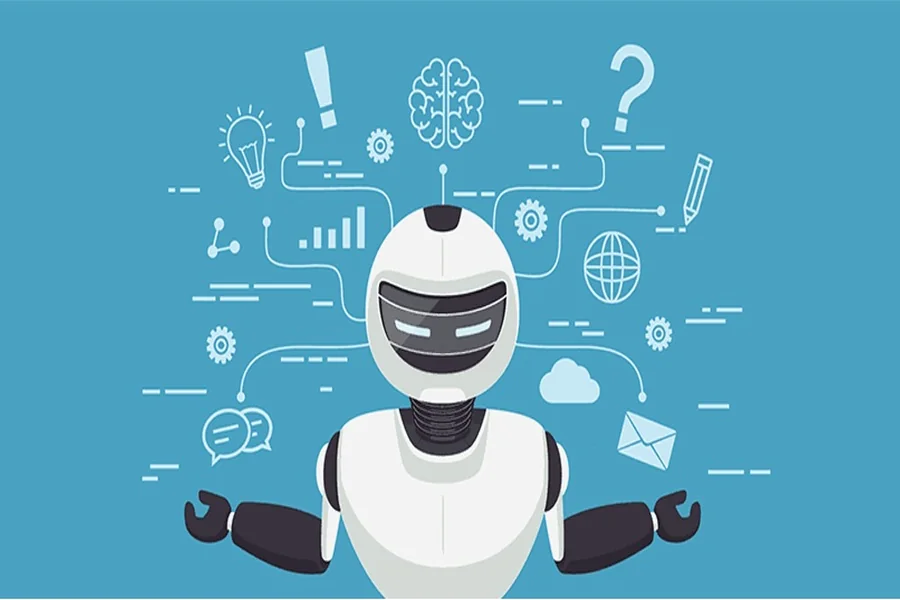
Quality teams face a paradox: more apps, more permutations, tighter release windows. software testing ai resolves that tension by automating what scales (design, selection, maintenance) while elevating human judgment where it matters (risk, exploration, storytelling).
What changes with AI—concretely
- Story-to-tests generation: models propose positive/negative paths, boundaries, and datasets from well-written acceptance criteria.
- Impact-based selection: ML ranks code changes by risk (churn, complexity, ownership, telemetry) and runs the most relevant regression subset first.
- Self-healing locators: when DOM attributes shift, AI infers the intended element using role/label/proximity signals, logging decisions with confidence scores.
- Visual & anomaly detection: computer vision and stats catch layout drift, rising latency, or error spikes—issues status codes miss.
- Outcome-centric oracles: assertions verify business results (balances, invoices), not just 200s.
What doesn’t change
- Governance: DoD, risk-based test design, and traceability still rule.
- Human oversight: reviewers curate generated tests and approve persisted heals.
- Determinism: reliable data and environments remain non-negotiable.
Guardrails that keep trust high
Set conservative healing thresholds and “fail loud” on low confidence. Record prompts, generated artifacts, and heal events in source control. Use privacy-safe synthetic data and least-privilege secrets. Maintain a quarantine with SLAs; treat flake as a first-class defect.
Measurable outcomes
- Cycle time: PR time-to-green and RC stabilization trend down.
- Leakage & DRE: fewer escapes, higher removal efficiency.
- Flake rate: fewer reruns, less toil.
- Maintenance hours: AI cuts selector churn and manual curation overhead.
30-day pilot
Week 1 baseline KPIs and an API smoke on one money path. Week 2 add a minimal UI journey and visual checks. Week 3 enable impact-based selection and conservative self-healing. Week 4 publish deltas (runtime, flake, leakage) and decide the scale-up plan.
Used thoughtfully, software testing ai turns QA into a faster, calmer, more predictable system—without sacrificing safety.